
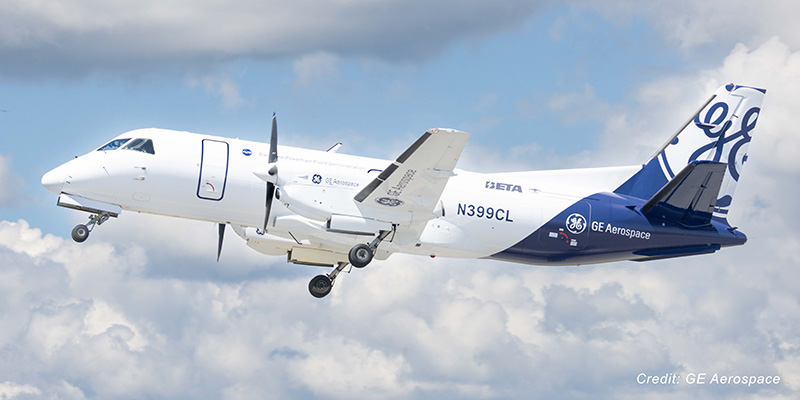
GE Aerospace’s hybrid-electric flight demonstrator took to the skies over the Farnborough International Airshow, with plenty of support from Aurora Flight Sciences.
GE Aerospace demonstrated a megawatt-class hybrid electric propulsion system for future commercial aircraft with flights during the Farnborough International Airshow. Aurora Flight Sciences, a Boeing company, was part of the expert team that brought the experimental aircraft to fruition.
The flight demonstrations featured technology developed through NASA’s Electrified Powertrain Flight Demonstration (EPFD) project. Through GE Aerospace and Boeing, Aurora began work on the program in late 2021. Together, the team progressed toward the program goal of conducting ground and flight tests of an integrated megawatt-class powertrain system, culminating in the world’s first high-altitude hybrid electric flight and validating concepts that could enable a new generation of more electric-powered aircraft.
To reduce risk and enable rapid development, the team used an existing aircraft, a Saab 340B, modified with a hybrid-electric system that pairs a conventional CT7 turboprop engine with GE Aerospace’s megawatt-class electric powertrain. Aurora designed and manufactured aircraft modifications to accommodate the new hybrid-electric powertrain and completed complex system integration work to address the technical challenges associated with high-voltage electrified propulsion in flight.
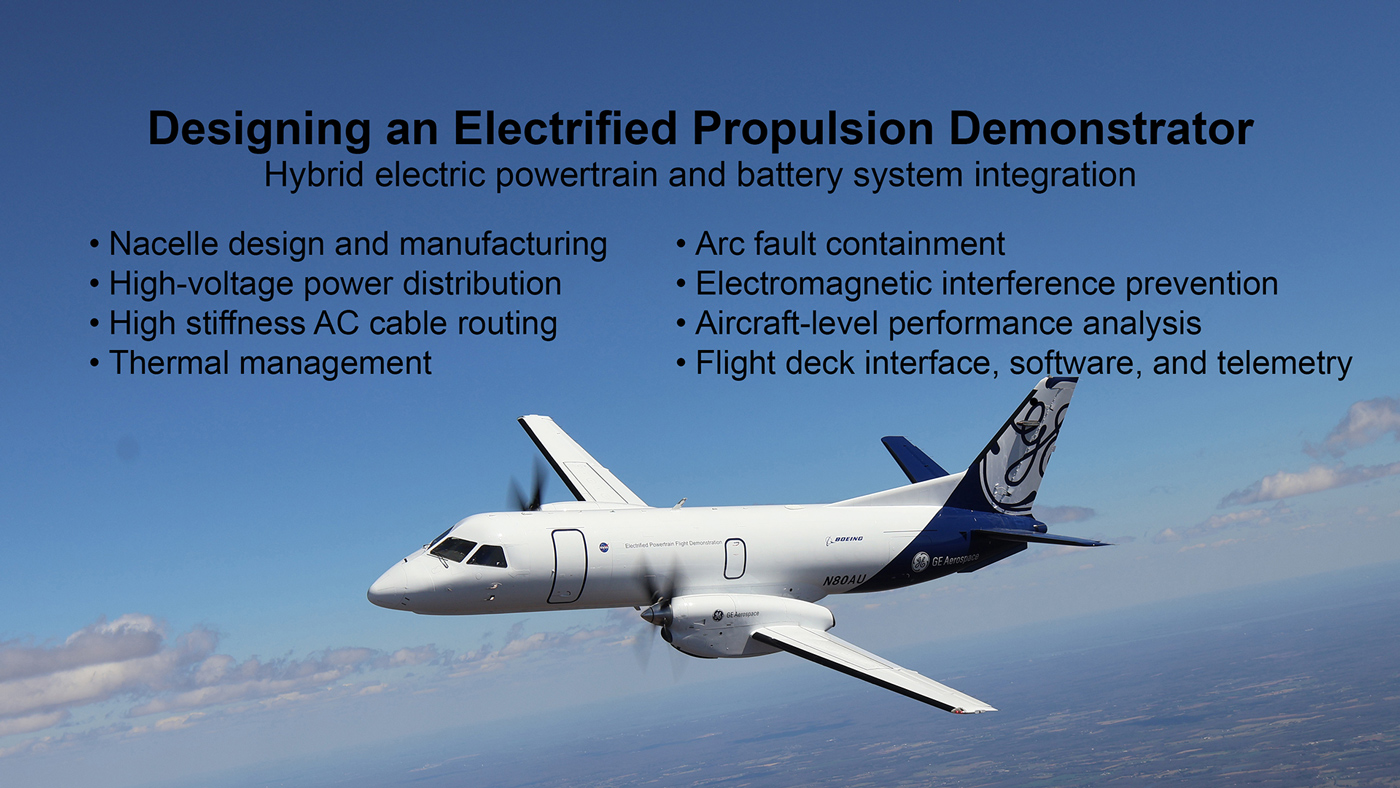
The team delivered multiple first-of-a-kind advancements to enable the successful integration of a MW-class electrified propulsion system on a legacy airframe operating at commercial altitudes. Aurora’s key accomplishments included:
- Addressing critical aspects of high-voltage electrical power transmission, including electromagnetic interference, system safety, fault management and protection, and thermal management.
- Delivering a ground test asset that replicates the aircraft modifications, including the nacelle and hybrid-electric system with electronics and cooling, to enable safe and efficient testing of components, controls, electronics, and more.
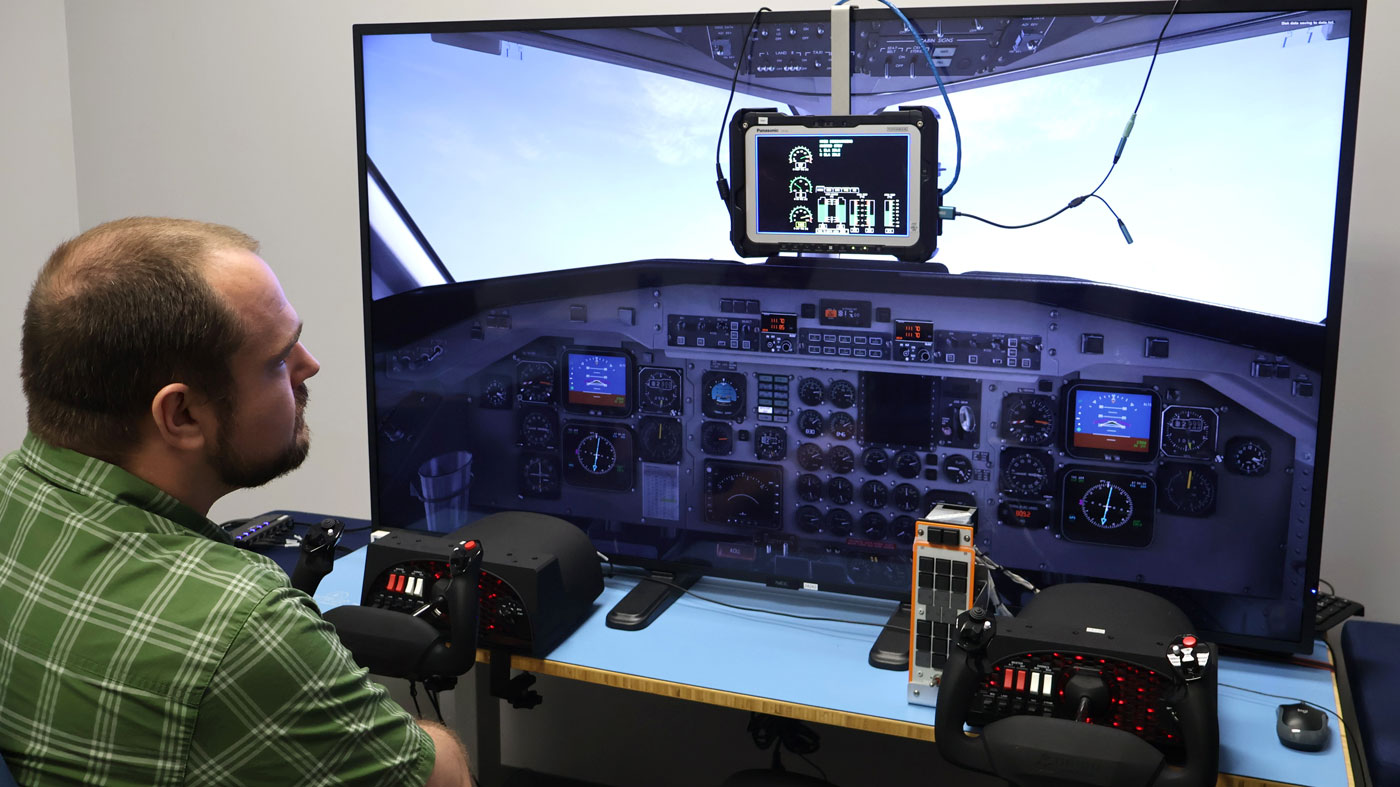
- Developing pilot-facing software and controls– cockpit displays, annunciation logic, electric throttle control, and switch panels — and building a flight deck simulator for software testing and pilot training.
The efforts of the entire program team, including Aurora, GE Aerospace, NASA, and BETA Technologies, reflected the rigorous application of typical aerospace design practices to a new class of electrified propulsion systems. This work brings the future of more sustainable, electrified flight in single-aisle commercial airliners closer than ever before.