
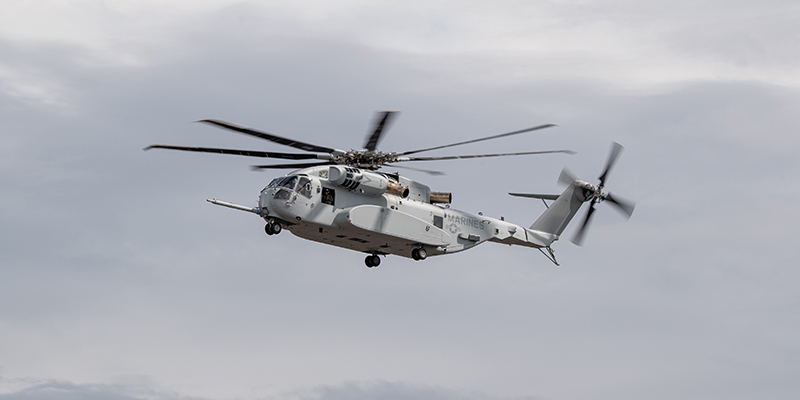
Credit: Lockheed Martin
Aurora delivers precise, high performance structures that enhance the strength and reliability of the CH-53K aircraft.
Aurora Flight Sciences, a Boeing company, produces essential assemblies for Sikorsky’s CH‑53K® King Stallion heavy‑lift helicopter: the main rotor pylon, which supports the rotor system, and the engine nacelles, which house and protect the aircraft’s engines. Designed to carry up to 36,000 pounds across challenging environments, the CH-53K depends on components that deliver exceptional strength, precision, and reliability.
“Our team takes tremendous pride in the structures we build for the CH-53K,” said Luke Colville, VP of manufacturing at Aurora. “Every component reflects the precision, discipline, and commitment required to support those who rely on this aircraft in the most demanding environments.”
The two assemblies include approximately 90 unique composite parts, most of which are manufactured at the company’s West Virginia facility where employees have supported the CH‑53K program for more than a decade. The team’s expertise ensures consistent delivery of complex composite structures that contribute directly to the aircraft’s performance and safety.
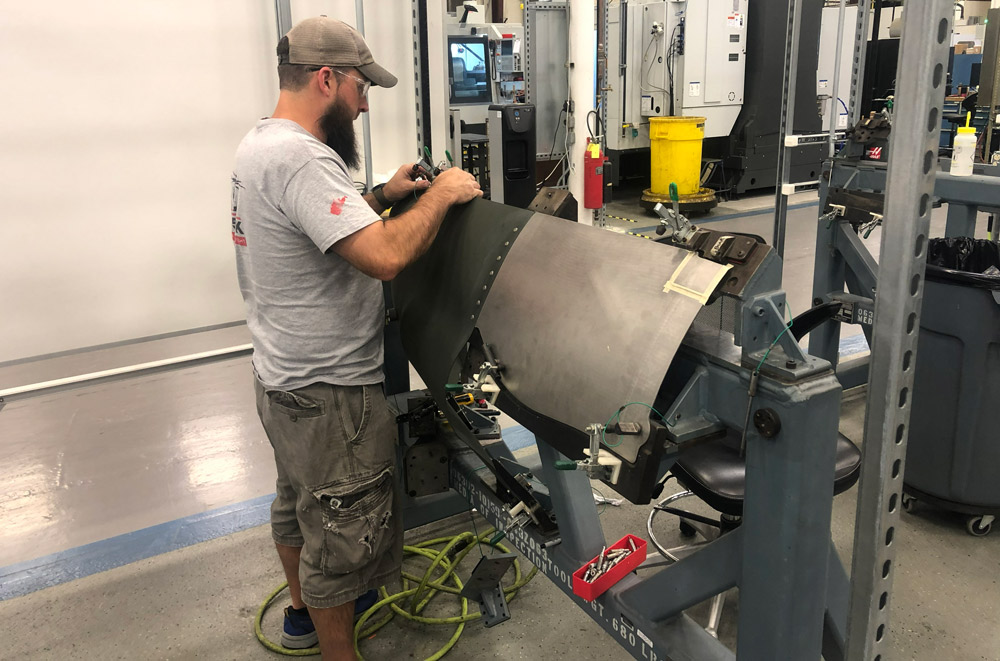
CH‑53K Assembly Technician Steve Wehler installs composite and titanium detail parts that form the nose gearbox fairing, part of the nacelle, a protective aerodynamic structure that shields internal components while also streamlining airflow and providing easy access for maintenance.
To ensure long‑term support for the CH‑53K, Aurora is investing in advanced manufacturing technologies that improve quality, enhance repeatability, and reduce overall cost. One of the most significant innovations is the Flexible, Robotic Composite Machining Cell (FRCMC), a one‑of‑a‑kind robotic system designed entirely in‑house to automatically perform trimming, drilling, and inspection operations. The FRCMC has processed more than 4,500 CH‑53K components to date achieving over 99% on first-past quality metrics and improving repeatability while lowering overall production costs.
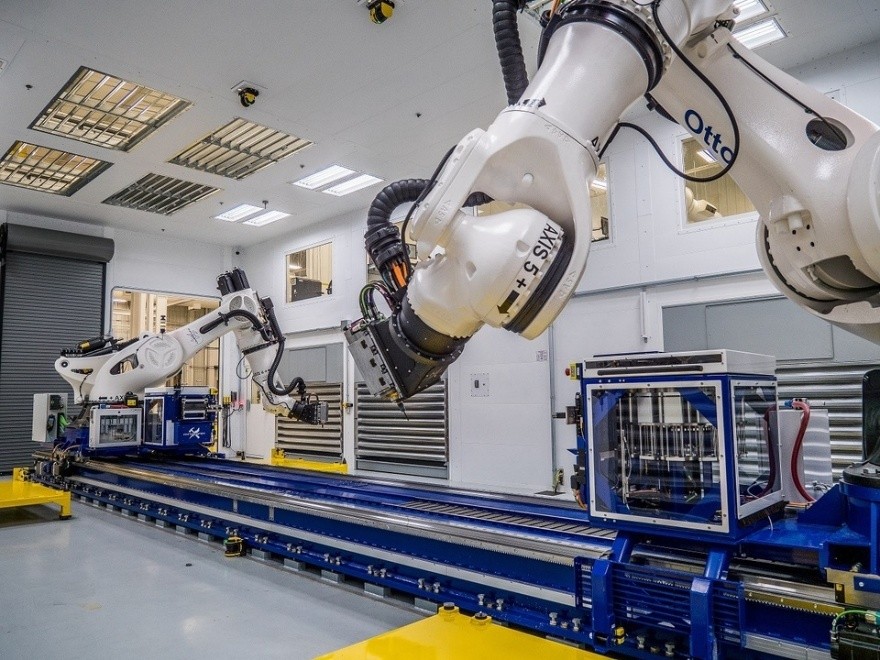
The FRCMC performs a wide range of processes with high precision, delivering consistent quality at significantly reduced cost for mixed low‑ to medium‑rate production programs.
“This technology doesn’t replace our people; it supports them,” Colville said. “It allows our team members to focus on higher‑skill, hands-on work, while more repetitive tasks are handled with the precision of automation.”
This includes hand layup processes, a skillset that is taught through internal training programs and supported by AS9100 certification.
Expanded to approximately 227,000 square feet in 2024, the facility also features non-destructive inspection machines and a 10 ft. by 40 ft. autoclave capable of producing up to eight parts simultaneously, improving efficiency and reducing cycle times.
Aurora’s expertise, technology, and people work hand in hand to deliver the precision and durability required for the CH‑53K. With expanded capacity and next‑generation manufacturing systems in place, the company is well positioned to meet future production needs and continue supporting the mission-critical needs of those who rely on CH-53K in real‑world operations.